The Cognitive Science of Teaching & Learning

Unit 4 Project #1 Application of Mental Representations
Lynette Markey
| Mental representation | Defined | Example | Instructional event |
| Logic | Why people make inferences the way they do. This can be broken down into two categories of deductive reasoning, the if/then theory or pure logic. The second category is inductive reasoning, the if/what do you think theory. It gives a learner a few choices and then decide what is right. | If you put your hand over the fire you will get burned. If you put your hand too close to the flames what do you think will happen. | BSA fire safety class |
| Rules | Rules are like logic, but the mental thought process is a bit different. For example, if a person studies hard then it is possible pass the class. There is pure logic along with doing the right thing such as if/action. People also have mental and procedural rules that can produce a certain behavior to help achieve the action. | Do not turn your back to a fire, always keep water near and do not run. | BSA Fire safety class |
| Concepts | Is like an abstract idea or if there is a mental image of the written words. Ideas are put into categories, procedures are set and those produce a behavior, results into why an idea can be transformed into words. | What tools could be used to enhance safety for cooking over an open fire? | BSA Fire safety class |
| Analogies/Cases | A way people have a concept or process in how something is looked at, almost a parallel way of looking at something. For example, some need to visualize an idea to understand it verbally. | 1)Fire is always attended, don’t let yourself be burned by inattention. Stop, drop, and roll. 2)Make sure that water and shovel as near, always be prepared. 3)Use cold water to make sure fire is out. Only you can prevent a forest fire. | BSA Fire safety class |
| Images | Often used instead of words. If a mental picture is used there is a good chance it will be remembered longer then a formula. | Visualize the fire pit and what is needed before striking the match. | BSA Fire Safety class |
Part 2: Connections & Reflections
I have been involved in the Boy Scouts of America for over 30 years and finally made a connection to the cognitive science of teaching and learning. Young boys have a mind of their own and motivation to learn new tasks vary from person to person. Some are intrinsic and are so excited to learn something new while others are extrinsic and only care about the merit badge being issued so they can achieve the Eagle Scout award.
Prior to this class teaching seemed to be a format of rules written down in a book for the leader to follow and hope that the youth understand. Very little instruction was given as to how to teach the new skills and most important how to keep learners interested. Now it seems that that the mental representations play such an important role in understanding material and now seems impossible to teach without it.
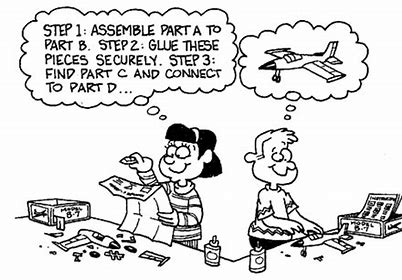
The example used for teaching the Fire Safety class was previously done with so much lecture time I bored myself. By using a new way to teach using the mental representation there seems to be a connection from one step to the other to produce knowledge. If pure logic is used then a scout knows that if you put your hand in a fire it will be burned but when asking the question of what do you think will happen it causes a learner to pause and reflect rather then just making a statement. If an educator states some rules to prevent an accident and a concept can be created by the learner, it is possible to learn events that can be impacted by images (visual ques) and analogies provided. Most young adults have their own ideas of how to understand new material however a teacher can direct ideas that are in their heads into a new learned knowledge that will stick.
(Jones, 2002)
In the future I will be choosing to teach adult learners online instead of youth. The challenge is that adults learn very differently from youth. Adults are more self-directed and rely on life experiences so it may be a challenge to determine what knowledge is already obtained. However, by the use of the mental representations I believe there is a way to keep learning exciting by giving more time to create a concept and visual images instead of more lectures.
References:
Blazek, D. (2012). Why am I going for a degree?. [image]. Originally published on blog.post.edu
Jolly, C. (2017, Nov 20). Fire Safety merit badge troop 504. Retrieved from https://www.slideshare.net/CharlesJolly1/fire-safety-merit-badge-troop-504-82384637
Jones, B. (2002). Creativity and Innovation [image]. Retrieved from http://faithinklinescreativity.blogspot.com/2012/09/double-journal-entry-2.html
Sarmah. A. (n.d.). Cognitive Learning – Strategies to learn effectively [image]. Retrieved from https://mindwiper.com/cognitive-learning/
Unit 6 Project #2 Perkins Analysis
The following paper will describe and define six of the seven areas of Perkins’ Principles of Teaching then continue to show examples of each principle in a non-example fashion. Following the first two sections will be examples to support the application. For the ease of reading the information will be set up in chart form. The paper will conclude with connections and reflections to review the prior and new knowledge obtained during the review of Perkins and how it may be utilized in future learning environments.
Part One: Analysis & Application
| Principle Definition | Personal Non-Example | Strategies to fix the Non-Example |
| Play the whole game means going beyond the content of information it is about digging deeper to find explanations and justifications to the questions sometimes even creating an activity to work with. For example, students learn to identify numbers then add and subtract, multiplication and division and only then go on to solving things in the real world with hands on activities such as percentages off clothes on sale. | A personal non-example would be teaching a child how to make brownies. If you leave them all the ingredients and leave the room instead somehow makes a cake. | The point of playing the whole game is to get better at doing something by trying it yourself. The junior version of the game would be the non-example of guessing what you know but playing the whole game would be to use problem solving skills and learning how to measure, mix, bake, and taste the whole pie. According to Perkins “it’s never just about content. Learners are trying to get better at doing something” (Perkins, 2009) |
| Make the game worth playing is about keeping people interested in information to want to learn more. The way to do this is by having personal connections to keep motivation relevant and emotional so a person wants to keep going to learn more. This can be intrinsic or extrinsic motivation because motivation is connected to emotion. | A boy wanted to learn piano. He was bought everything needed and he learned quickly how to read music and play basic notes. Moved on to songs and decided to quit. | For a learner to remain interested or “make the game worth playing” it is necessary to teach something that has motivational reason to want to learn more. Four ways of helping would be welcoming with information, give feedback, assign more difficult material to stay motivated and seeing output of understanding. “teaching for understanding is a way of making the game worth playing” pg 65 |
| Working on the hard parts is about not skimming over what is not easily understood or the “hard part” it is like playing golf knowing how to hit the ball each time and what form to use to get to the green is great but one must not skip learning to putt to succeed in winning the game. The reflection of what you learned would be in the score you receive by deliberately practicing more. | An excellent way to look at this is a natural golfer. Each swing, drive, or putt is on point and the game is won with ease. | When a learner is not a natural they may spend time working on just putting. This point is applied in the hearts and mind theory where a learner “takes it to heart, keeps it in mind, and does better the next time” (Perkins, 2009 pg. 80) they don’t give up on one part of the game just because it is hard. If a coach is used then the hard parts can be helped with the 3 key elements for communication feedback which are clarification, appreciation, and concerns and suggestions. |
| Play out of town has to do with the knowledge already obtained and how it is transferred to something new. Example would be driving a car in the united states verses England. Learning to drive a car on the right side of the street still involves all the mechanics of the car exp gas, brakes, turning etc. Now take the same knowledge and drive on the Left side of the road. The knowledge we learn today needs to transfer something we may need later in life. | A good example of a training that did not work would be with the scouts and camping. There was a planned on how to pitch a tent, practiced in the parking lot, worked on knot tying skills. They knew it all until the day of the event. They all stood around looking at each other and no one know where to begin. | The transfer of learning failed. Was it possible that there was too much inert knowledge? If done again, there would give more cues to try to trigger retrieval of the information possibly creating a game with a prize to trigger conscious thinking. A better way to promote understanding would be working with the 4 basic components of a working memory. If given a bit of information, it can be stored right away then they could have retrieved some of it to at least get started to achieve the goal. (Doolittle, 2013) |
| Uncover the hidden game means that inside of each item learned there are underlying pieces of information hidden there. When something new is introduced it is necessary to see what it relates to in previous learning, question, analyze, and verify what is being introduced. | Just bought a new bathroom scale which caused a boy to ask why if I stand on a scale it gives a number then get off and it is zero – he decided to take apart the bathroom scale. | If I was teaching the approach should have been “What do you see going on? What do you see that makes you think so?” (Perkins, 2009) which should be followed with a strategy to uncover the hidden game such as the 5 steps to self-management which would have been to work out the question in his mind, plan how to explore it further, implement the plan and verify the answer. |
| Learn from the team and other teams is a social activity. This involves mentors that work to help each other think about what is being taught. This method allows interaction to be informal and the object is not to give answers but to ask questions to guide, advise and give feedback. | Going back to a T-ball season where the team had been together for several years. Previously they worked together well but this year there were many chiefs and no Indians. Everyone knew everything and ultimately, we lost that year. | As a coach what should have been done was to use the social idea of pair problem solving. By pairing like positions together it would be possible to be problem solvers and thinkers. It was possible to improve communication for the players to help each other by observing each other and giving feedback. |
Part Two: Connections & Reflections
In my opinion the textbook written by Perkins is user friendly and applies to everyday life as well as any coach, educator, or student. Perkins analogies to playing the game is one of those moments where one just thinks “Oh, is that what is going on?” What I got out of his teachings so far is that teaching a person goes way beyond the simple facts or “Elemititis”,which is learning so much but rarely using the information, as Perkins puts it, it helps learners to pick up information from others as they go along (Walker, 2009). Educators need to make any task more challenging using Perkins principles.
When setting the tone of something new I always refer to the Boy Scouts I work with, so the following is going to include Perkins principles 1-6 to show how each one connected to the learning at hand. Scouts only meet weekly for 2 hours so to put this in perspective there is not much time to really review anything since it takes a while to even get started. The project this week is going to be knot tying, how many are there, where are they used, how to tie them. According to Perkins (2009) he stated that learners need to do something to get better at the task at hand and in this case, it is project-based learning where they all needed to work together to understand and succeed in the task. There were several times that everyone was bored and could not connect to why it was so important to learn all of this, so we had to move onto making the game worth playing. We created a relay game with a small prize for the winning team to see who could tie the knots successfully in the quickest time. Of course, the winning team had bragging rights as well as confidence that they were understanding the information that was given. The teams that lost now began to work on the hard parts and so did the leaders, where did we not communicate well, we then moved to metacognitive strategies to help students “think about their thinking” (Perras, 2014, pg. 2). With some communication feedback there was the ability to clarify what we learned, appreciation which gave some feedback on how they succeeded and what needed to be done to keep going and some concerns both positive and negative. In general, we reviewed what the problems were and how do we fix them. Continuing with the Perkins principles we are now at the 4th principle of playing out of town. The scout unit is now at a Jamboree where there are competitions on what we all know and who is the best at each task from pitching tents to building rope bridges as well as cooking contests. We felt prepared however when we applied what we learned in some areas it was a real problem. When we worked on the bridge, we failed at the knot tying and the bridge fell. Why? Not only did we work on this, tried to make it fun, gave incentives to help the information transfer to memory but it still was a failure. After reading Perkins this point of the book made me realize that somehow the information was not transferred to memory and I believe I know why, we never told them there was to be a competition. We were teaching them but the point as to why which was to prepare them to use this skill and knowledge elsewhere was left out, therefor no reason to really try to remember any of this. What we should have done was to remind everyone that what we were learning was to be used at the Jamboree, so we need to learn the knots to win the bridge challenge. Simply put, playing out of town is the what, to where, and how to transfer knowledge.
Now we are moving on to Principle 5, Uncover the hidden game. The scouts are now at the next week’s meeting feeling a bit defeated so what do we do, we discuss what happened and asked if anyone had any ideas as to why. We broke down what just happened and really analyzed where we went wrong through the strategic reading approach Perkins mentions (2009). Each person had questions that needed to clarify, and we reviewed each one both on the scout side and the leader side and then we made a prediction that we could win next year. The most interesting point came when one of the boys asked about a particular knot that if we were having difficulty could we have tagged out to give someone else a try for better results. Interesting thought. Guess on their own they learned that sometimes the game hides and if their best is not good enough it is ok to ask for help from others which brings us to the 6th principle of Learn from the team and other teams. Until now each person learned each not solo, but activities are really set up as social activities. Many times, we need to asses what went wrong during a lesson and how should this be worked on successfully. In this case it was necessary to pair up the older youth with younger and go back to the parts that seemed difficult and reteach but with care to not socially alienate anyone. We used the pair problem solving method and did not realize it at the time. They listened to each other and practiced by interaction and demonstration repeatedly. The information was informal with lots of chatting and laughter, so it looked like this was the way to work out what happened. No one really gave any direct answers to questions but more of feedback to retrying another way. They all seemed to play the whole game.
Strange how the principles within this book worked well within our scout unit. In the future when I begin to teach older students, I wonder how all of this will work since on line does not offer hands on demonstrations. I believe that each principle in Perkins’ book will play out within the units of a course and some will be easy to see while others will be hidden. One thing I believe is by promoting understanding about the whole reason why education is important and working through the principles of knowledge one can only hope it will be committed to memory and therefor can be retrieved later for real world use.
References
Doolittle, P (2013, Nov 22) How your “working memory” makes sense of the world.
Retrieved from https://www.youtube.com/watch?v=UWKvpFZJwcE
Perkins, D. N. (2009). Making Learning Whole: How Seven Principles of Teaching can Transform Education,1st ed. San Francisco, CA: Jossey-Bass
Perras, C. (2014, Jul 17). Metacognitive Strategies or “Thinking about my Thinking”. Retrieved from https://www.ldatschool.ca/metacognitive-strategies-or-thinking-about-my-thinking/#:~:text=According%20to%20the%20Inclusive%20Schools,can%20positively%20impact%20students%20who
Walker, R. (2009, Jan 1). Education at bat: Seven principles for educators. Retrieved from https://www.gse.harvard.edu/news/uk/09/01/education-bat-seven-principles-educators
Unit 8 Project #3 Final Project
The following paper will sum up resources learned about mental representations, how to use Perkins strategies to repair the problem along with types of instructional strategies that tie the two theories concepts together. The paper will conclude with a section of connections and reflections.
Part 1: Analysis & Application
| Mental representation Defined | Perkins Strategy to fix problem | Instructional strategies to alter instruction and incorporate Perkins |
| Logic: Why people make inferences the way they do. This can be broken down into two categories of deductive reasoning, the if/then theory or pure logic. The second category is inductive reasoning, the if/what do you think theory. It gives a learner a few choices and then decide what is right. Example: If you put your hand over the fire you will get burned. If you put your hand too close to the flames what do you think will happen. | Playing the whole game: In learning the whole game their needs be effective hands on learning as well as the idea to learn about something to so it can be used later or the If/then. | The instructional strategy in learning sometimes is as simple as learning to do it. A learner should get better at the task through hands on learning and thinking out each step. Through group instruction and assessment Perkins principle #1 works here. (Perkins 2009) |
| Rules: Like logic, but the mental thought process is a bit different. For example, if a person studies hard then it is possible pass the class. There is pure logic along with doing the right thing such as if/action. People also have mental and procedural rules that can produce a certain behavior to help achieve the action. Example: Do not turn your back to a fire, always keep water near and do not run around the flames. | Uncovering the hidden game, applies since within each new learned activity there is an underlying piece of information hidden within. | Student knowledge tends to be understood when it involves a real problem to be solved (Perkins 2009) Strategic approaches help students to learn the 4 heuristics approaches to reciprocal teaching. Questioning, clarifying, summarizing and prediction. (Perkins 2009) The dialog will help promote self-management. |
| Concepts: Is like an abstract idea or if there is a mental image of the written words. Ideas are put into categories, procedures are set and those produce a behavior, results into why an idea can be transformed into words. Example: What tools could be used to enhance safety for cooking over an open fire? | This refers to Perkins Playing out of town. The classroom training is now completed and must be taken into the real world for implementation. The near and far transfer relate to making a connection to what you have been explained to solve a problem so it can not be applied. | The strategy is to teach transfer and to prepare people with the proper skills, knowledge and understanding for use in future learning. (Perkins 2009) |
| Analogies/Cases: A way people have a concept or process in how something is looked at, almost a parallel way of looking at something. For example, some need to visualize an idea to understand it verbally. Example: 1) Fire is always attended, don’t let yourself be burned by inattention. 2)Make sure that water and shovel as near, always be prepared. 3)Use cold water to make sure fire is out. | Working on the hard parts or attention, memory, and transfer.reminds students that learning “takes it to heart, keeps it in mind, and does better the next time” (Perkins, 2009 pg. 80) It is important to remember rules, understand them and remember so it can be transferred to long term memory. | Metacognitive strategies will help students to “think about their thinking” (Teal Center Staff, n.d.,para 8) also Assessments are key, and it is necessary for the 4 assessment tools (Perkins, 2009) Actionable, understanding, peer and self, and communicative feedback. For some skills to be learned assessment is key. |
| Images: Often used instead of words. If a mental picture is used there is a good chance it will be remembered longer then a formula. Example: Visualize the fire pit and what is needed before striking the match. | Relates to Learn from the team and other teams. Communication from peers, observation, as well as mental images can assist in giving the correct answer prior to experimentation. | Unit 2 article project learning mentions behavioral inhibition and working memory being able to stop and think before acting is a go/no go mentality. Asking a group, the larger picture question is a great strategy. Perkins clearly states that peers learn from peers to help with self-evaluations. |
Part Two: Connect, Synthesize and Reflect
In order to review cognitive science and what has been learned over the last 8 weeks it may be necessary to break it down piece by piece starting with the mental representations which tie to Perkins teaching the 7 principles of learning and ending with artificial intelligence.
Through out most of my adult teachings it has been directly connected to the Boy Scouts of America and the youth, both boys and girls. The way they looked at what was being taught changes from person to person due to intrinsic and extrinsic motivation. Hoping to reach each one just a bit was a challenge but seem to be following the mental representations naturally without them being forced. Each category of Logic, Rules, Concepts, Analogies/cases, and Images seemed to play out. It seemed interesting that the layered model for knowledge discovery also fit into what was being addressed at each meeting. By the end of a project we also seemed to progress through the Perkins principles too, so the class seemed to put everything in order.
This time I would like to use the Pinewood Derby as an example of each area. Since the scouts in the group were older, we decided to run a derby for older youth. This time many already had deductive reasoning in place which coincided with the logic theory but many never won a race so we implemented the if we added weights to a different location what do you think will happen. Therefor, placing the rules concept in effect, the if/then now was in place in their minds. A new concept had to be created removing what was previously used so as to create a new one. Some resorted to the internet for ideas or technology. This is where the layered model for knowledge discovery appeared. They addressed questions about what they knew verses real world trial and error and what they discovered was if the information they googled was useful or not. So, each person has now created their own analogy or a process of how to solve the important problem, winning the race. The images from the past have now evolved into a new understanding of what they expect to see in the new race.
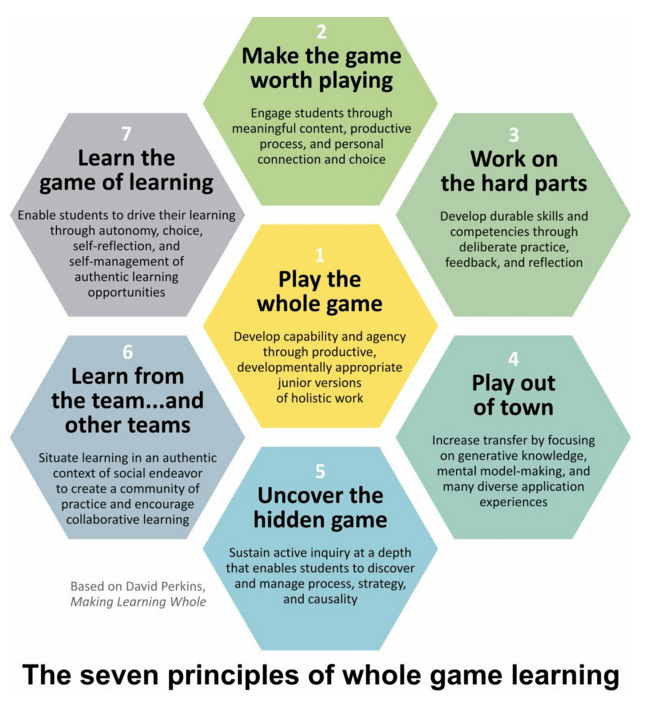
The scouts seemed to move through Perkins’ process as easily as the mental representations. When each scout was younger, they were filled with elementitis (Perkins, 2009). Week after week of how to build, weigh, and race their cars was taught but it all revolved around Playing the Whole Game. This was no longer about learning it is now about trying to get better at doing something (Perkins, 2009). They already knew the junior version of the game now it had to be improved upon. They seemed interested, so making the game worth playing was easy to see. Each one had a combination of intrinsic and extrinsic motivation because they wanted to win, and it seemed easy to create a new car design. With so much feedback going on the project moved quickly. Without them knowing, leaders were trying to make them understand the difference between the basic skills they learned in Cub Scouts and the advanced skills as you get older.
The third principle of Perkins is the Hard Parts and it seemed to play out with ongoing assessments not only from the leaders but the other scouts. The communication and ideas were flowing, and they seemed to really be putting thought into what was going on and in general seemed to flow into the trial of the cars or playing out of town. We left the meeting hall, set up the track and began the test to see if age and knowledge helped improve the race results. For some it was still a real problem for others a success. Did they learn anything during the transfer of learning? During the hidden game each one realized that weight placement was key. This was not realized when they were younger. They realized that the weight went more to the front and not under, the car gravity would pull it faster, the hidden game of casual thinking. (Perkins, 2009). Already covered was Learning from the Team so the unit transitioned to Perkins’ principle 7, Learning the Game of Learning (Perkins, 2009). We let them into the driver’s seat and used the hands-off approach. When in cub scouts they were passengers, the seat was occupied by each of them but their leader and parents drove. Now as older scouts, they needed to problem solve alone and be the driver. What I found interesting is that each person at one point and time used technology for help. From the YouTube video and the iPhone to Google, each one used an artificial tool or what David Chalmers stated the extended body (Chalmers, 2011).
The above information seems to be a bit detailed, but it helps to set up the section for reflection. I believe that teaching for tomorrow begins with junior versions of what is to be learned, start small. Get creative and create momentum through the whole game using the mental representations as a guide and most important do not forget it is ok to use artificial intelligence. The derby car exercise did promote all of the points to cognitive science of teaching and learning ending with the most important item of the 21st century, vision and innovation. Mickey McManus stated it best in his video, “Today we must all be designers” (McManus, 2011). As designers, remembering a great point with the derby cars, start young and don’t wait until they are in high school to teach something that can help them later in life.
(Markey, 2020)

(Calkins,2016) (Gnatoka, 2013)
References:
Calkins, A. (2016, Jan 26). My Ways #2: Learning design as rich as your definition of student success; The seven principles of whole game learning (image). Retrieved from https://www.nextgenlearning.org/articles/myways-2-learning-design-as-rich-as-your-definition-of-student-success
Chalmers, D. (2011, Jun 11). The Extended Mind. Retrieved from: TedxSydney, https://www.youtube.com/watch?v=ksasPjrYFTg
Gnatoka, V. (2013, Oct 3). Artificial Intelligence Study Project [image]. Retrieved from https://www.slideshare.net/ViktorijaGnatoka/artificial-intelligence-study-project
Jolly, C. (2017, Nov 20). Fire Safety merit badge troop 504. Retrieved from https://www.slideshare.net/CharlesJolly1/fire-safety-merit-badge-troop-504-82384637
Markey, L. S. (2020). Mental Representations Model [image].
McManus, M. (2011, Jun 11). Innovate: Educate . Retrieved from TedxGrandRapids, https://www.youtube.com/watch?v=A5NKHY-bF9k
Perkins, D. N. (2009). Making Learning Whole: How Seven Principles of Teaching can Transform Education,1st ed. San Francisco, CA: Jossey-Bass
Teal Center Staff, (n.d) Teal Center Fact Sheet No. 4: Metacognitive Processes. Retrieved from https://lincs.ed.gov/state-resources/federal-initiatives/teal/guide/metacognitive#top
 Lynette's Educational Journey