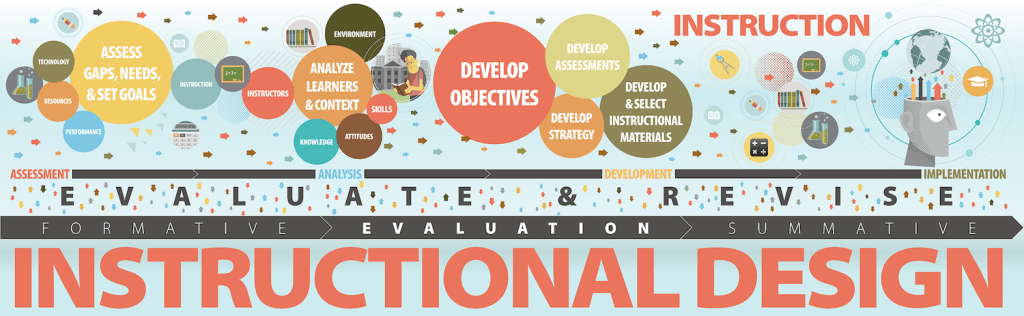
This course is going to teach how to design an online course. There will be some blogs to read as well as a four unit course created from scratch.
Teaching Philosophy
Lynette Markey
Post University
Unit 8 Assignment –Project #4
The following paper will be in reference to the many tools needed to become an effective online educator. The topics to be addressed will be defining teaching and learning online, the role of student and instructor, the importance of interactivity as well as strategies for assessing a learner to achieve the most understanding from the course. The conclusion will be my personal online teaching philosophy which will be used in my own personal online to educational journey.
Defining teaching and learning in an online environment
How does one define an online teacher and what is the difference between teaching and learning online. Teaching within an online environment is based on the computer, the internet and the learner. The priority for an online educator is to understand the technologies that are in reference to the course so they may communicate not only with the student but assist with the class material as well. It is important for an online educator to notice if a student may need help by being observant. If there is a change in how often a learner enters the discussion or there is a tonal change it may be necessary to reach out to see if assistance is needed. A well-constructed course cannot be taught without a properly trained educator to facilitate it. The online educator of today should be able to work with all types of technology so the learner can feel comfortable when a student asks for assistance if a link will not open or there is confusion within an assignment. The most important defining trait for an online educator to remember is learners come in all age groups with variations of technological training.
The role of the student in an online course
The role of an online student should be an open minded one with the ability to be self-motivated as well as being able to convey thoughts in a written format. Online students may be unfamiliar with the way a class may appear online as well as the need for strong internet access and a comfortable workstation set up. It is important for students to understand that the role may require 4-15 hours per week per course to meet the minimum requirements (Palloff & Pratt, 2013). It is up to the online learner to stay on track to achieve the goal of completion of each course towards their degree. There are seven ways to stay on track:
1. Keep a to do list
2. Maintain a calendar for due dates
3. Find a study buddy
4. Take notes
5. Talk to your instructor
6. Look ahead
7. Have a set time and space to work.
(Keaton, 2018)
Without the tools needed for an online student it can be easy to get distracted and fall behind. The online student needs to realize that having a good study plan is a clear path to success.
The role of the instructor in an online course
The role of an online instructor is to maintain the course as well as being a facilitator for learners. The importance should be placed within the discussion questions being presented within the units to initiate further critical thinking concepts. There may be times when an instructor needs to clarify a discussion subject or redirect students in a friendly manor to remain on topic which is all part of the responsibilities. There are also types of interactions that can keep students engaged with the instructor. It is possible to use technology, videos, discussion board humor and many other methods to keep the learner engaged, all with the sole purpose of connecting with the learner to help retain material (Academic Partnership, 2011). If a student believes the instructor is not interested and does not encourage class participation it is more likely that the learner will not continue with their studies (Joyner, Fuller, Holzweiss, Henderson, & Young, 2014).
Importance of interactivity in online learning
Interaction within online learning is such an important piece in understanding material. With the world today being technological by way of the desktop, iPad, smartphones it is impossible to escape. Don Norman did sum up today’s world of interactivity very well, he said that designers need to be less logical so that it will be easier to understand. (N.A., 2013) My interpretation is that if you hate the set up of the online course you won’t use it and therefor will fail however if it is easy to use and flows with may videos to break up the learning a learner will want to continue to see what comes next. There was a study done for human computer interaction or HCI that agrees with Norman which simply stated is easy to use and easy to learn. The simple creation of the mouse, files, and folders on a desktop made online learners feel less cluttered, as well as use of the World Wide Web, which is all important to the fostering of students’ interactivity with online classes (Altenhofen, Schwab, Lewis, Schoeggl, & Thai, 2013).
Teaching strategies for assessing student achievement in online courses
Teaching strategies for the online learner can be used to encourage them to think on their own by asking questions inside of discussion boards or by way of a written paper comments but there is so much more. The standard form of issuing a quiz or a test can show if information is memorized from a textbook, but does it really assess the student retention of information? The importance of feedback during discussion board communication can tell if a learner has understood the material as well as a Blog to discuss the previous weeks reflection. This is my preferred strategy for assessing a student. The reply is specific to each individual learner and as stated earlier each one is unique. In this area there is always a way to get more information out of the learner by use of the six types of Socratic questions to clarify, probe for more information, question further and ask for reasons and evidence as personal viewpoints (Paul, 1995). To continue with the theory, ask more questions about implications and consequences and if a discussion is still flowing ask more questions about the question. This type of assessment truly shows if a learner has read and understood the material or just copied and pasted with quotes attached.
My online teaching philosophy
My personal online teaching philosophy is that all learners are unique with their own idea of what their educational journey will be. If students are comfortable with my theory of keeping it simple and fun, then I believe that the classes being taught will be remembered. It is important for students to comprehend the material the University must convey to the student however; it is up to the online educator to present it. By way of productive discussion boards as well as other assessment tools within comments educators can keep students engaged by way of clear communication that promotes debate. My goal is to be the educator who has a full class every time, easy to understand, and is fair with all aspects of the course assignments.
It is the job of every online educator to help students to success by using the best teaching methods available but how someone travels the journey is personal I can only be a guide.
References:
Academic Partnerships. (2013, Apr 19). Three types of interaction that foster student engagement. Retrieved from http://facultyecommons.com/three-types-of-interaction-that-foster-student-engagement/
Altenhofen, J. Schwab, J., Lewis, K. Schoeggl, B., Thai, B. (2013, Oct 22) Human-Computer Interaction . Retrieved from https://www.youtube.com/watch?v=C_AsBA0oHlE
Joyner, S.A., Fuller, M.B., Holzweiss, P.C., Henderson, S., & Young, R. (2014). The importance of student-instructor connections in graduate level online courses. MERLOT Journal of Online Learning and Teaching, 10(3), 436 – 445.
Keaton, A (2018, Aug13). 7 ways to stay on track during an online class. Retrieved from http://www.scholarshippoints.com/campuslife/tips-to-stay-on-track-during-an-online-class/
N.A. (2013). User Centered Design Don Norman [Video]. Retrieved from https://youtu.be/Wl2LkzIkacM
Palloff, R.M., & Pratt, K. (2013). Lessons from the virtual classroom: The realities of online teaching. San Francisco: Jossey-Bass.
Paul, R.W. (1995). Critical Thinking Foundation for Critical Thinking. Santa Rosa, CA Retrieved from http://www.umich.edu/~elements/probsolv/strategy/cthinking.htm
Facilitation Self-Assessment
Lynette Markey
Post University
Unit 7 Assignment –Project #3
The past two weeks have been in reference to discussion board questions being initiated and then the facilitation of the same question. Now it is time to reflect on the experience. When the first question was initiated, Would Pre-Post knowledge surveys be an effective tool to use in an 8-week online course. Why or Why not? Support your reasoning’s or give examples., there was very little conversation. I wondered if the question was not clear or that the learner may have missed the video that addressed this question. I did point to the video for clarity after one of the posts, but the conversation stopped. This one question seemed to be a failure from a teaching perspective. Even though, there was a need for question clarification as well as the ability for a viewpoint the question was a dud. From one of the responses there seemed to be confusion between a placement test and a knowledge survey. In review it seems the question may not have been explained correctly or maybe it was overly general (Carlton University, 2019). There may have been a need to peruse the differences between a Placement test and knowledge survey in order to continue the conversation further however by pointing out the video where the information was retrieved from there was a hope of further conversation.
The second question, Over the last few weeks material reading there were many assessment strategies reviewed for reflection to see if a course design is effective to the learner. The following have been mentioned often: Blogs, quizzes, tests, discussion boards, Wiki projects as well as written assignments. For this discussion I would like you to review the mentioned assessments. Choose which one you believe is the best one to use to reflect on material being taught and why. Please support your choice., had more of a conversation. I wondered if it was possible this question was more interesting because there was the ability to encourage critical thinking (TeacherStream, 2009). This question gave more of a prompt to choose and explore the differences to answer the question. After analyzing this question further, the second question seemed to be more discussed since both participants picked discussion boards as the answer. Was this because this is a familiar area and it was easy to discuss since this is a student – student interaction (Academic Partnerships, 2013)? Even if the instructor posed the original question, the communication is mostly within peers so the conversation is more relaxed and flows, therefor being prompted by each other was it what a learner really comprehended from the material?
Within both questions I believe that the discussion questions were answered with supporting videos and supporting articles and there was some interest to initiate a second response, but one learner did not reply and the other was interested. I understand that not all learners will be interested in the conversation but from an educator’s view I believe that one cannot force people engage in a conversation, only put the information there for one to see. The most important take away from this activity is the question lingering of did the proper questions get asked to keep someone interested? When working online it is so difficult to read into how emotions are playing into a conversation. Unlike face to face where you can see a person’s facial reactions and know when to change gears or continue.
Within my educational journey it seems that this activity has impacted the way to engage students online. For the rest of my classes it may be a great way to practice discussion responses to have a conversation continue rather then just answering a question. Since discussion boards seem to be the most used assessment tool then there is more of a need to develop my own skills for the future.
References:
Academic Partnership. (2013, Apr 19). Three types of interaction that Foster Student Engagement. Retrieved from http://facultyecommons.com/three-types-of-interaction-that-foster-student-engagement/
Carlton University. (2019) Effective questions for leading discussion. Retrieved from https://carleton.ca/edc/wp-content/uploads/Effective-Questions-for-Leading-Discussions.pdf
TeacherStream (2009). Mastering online discussion board facilitation: Resource guide. Retrieved from http://www.teaching.temple.edu/sites/teaching/files/resource/pdf/MasteringOnlineDiscussionBoardFacilitation.pdf
 Lynette's Educational Journey