Over the past three weeks I have been learning about designing and delivering information for an online course. The easiest way to review this is one week at a time so we will begin with week one on internet technologies.
The first week was a review of how the internet technologies directly applied to the online learner such as what makes a good course and the tools needed to teach them. The types of online technology were listed as the usual emails, videos, skype, blogs, wikis, discussion boards and more. The readings continued with the distant learner and how they understand material presented, this was interesting but offensive at the same time. The profile of the online learner seemed insulting to me. As an older student I found it interesting that the profile has changed from older, employed, place bound and goal orientated people who are motivated to learn to younger people who are diverse, dynamic, and respond well to changing technologies (Pallof & Pratt, 2013). Why can’t an older person also fit in this profile?
A few fun facts learned during the first week. First who owns a course that you design, do you or does the school? The answer is the institution you work for since you are “work for hire” personnel (Pallof & Pratt, 2013, pg. 15). This means whatever you put together to teach a class does not belong to you if you leave for another job. The second bit of information was a laptop is not considered a mobile device. In the eyes of technology cell phones, PDA’s, iPad, iPod are but why not a laptop? The answer is mobile devices are usually phones and desktops are computers. The laptop is somewhere in between but closer to a computer (Pallof & Pratt, 2013). Even though it is mobile it is not classified as a mobile device.
The second week moved away from definitions and started to discuss course design. The syllabus and what outcomes are expected were new to me but that was all. Since I had already created a mock course in Blackboard in EDU 632 the designing portion was a repeat of information. The syllabus was a new piece of information to incorporate into the mock course and it is important to remember that the grading criteria is broken down into percentages. It may seem unusual to point this out, but it needs to add up to 100% so double check your math.
The third week was focused on assessing the online learner. How do you really know if someone understands material and what type of tools can be used. The way to see if a learner understands is through assessments. Everyone knows about quizzes and exams but there is so many other options. After reviewing the material in Chapter 8, I learned that knowledge surveys are possible before a class begins and again if needed halfway into the course (Vai & Sousulski, 2016). The survey is a self-assessment of the learner and not meant to be a test. Just helps to fill gaps in learning where needed. What a great idea, what do you think, do you think this should be added to every course? Not all online learners start in the same place. For example, I already created a mock course, but others may not have and may struggle with how to begin. Another type of assessment is peer-to-peer reviews. I have used this type before by submitting my PLE so others can view and give feedback, I just never associated it with an assessment tool.
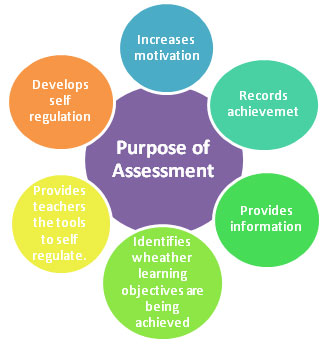
Smith, C., Smith, G., Sonneveld, R., Sonter, J., & Suckling, M. (n.d.)
In future teachings I would love to be able to use more authentic assessments in the designing of online courses. The application of real-life performance tasks being applied to real life, such as this one in Blog form is something that needs to be incorporated more into course work. I am a firm believe that if it is meaningful to me and something I will use in real life; I will remember it.
References:
Drake, T (2017, Oct 11). Authentic Assessment Video retrieved from https://youtu.be/b-85QM_DYBY
Pallof, R. M. & Pratt, K. (2013). Lessons from the virtual classroom: The realities of online teaching. San Francisco:Jossey-Bass
Smith, C., Smith, G., Sonneveld, R., Sonter, J., & Suckling, M. (n.d.) Effective Teaching: 2010 and Beyond![Image]. Retrieved form http://effectiveteaching2010and beyond.yolasite.com/assessment.php
Vai, M. & Sousulski, K. (2016). Essentials of online course design: A standards-based approach (2nd ed.). New York, NY: Taylor & Francis
Published by Lynette Markey on 5/21/2020.
 Lynette's Educational Journey