For my final Blog for this class I would like to reflect on what I have learned and how I applied the teachings to real life without even noticing it. The three topics I chose to revisit are the mental representations of cognitive science, Perkins 7 Principles of learning and Bronfenbrenner’s Ecological system.
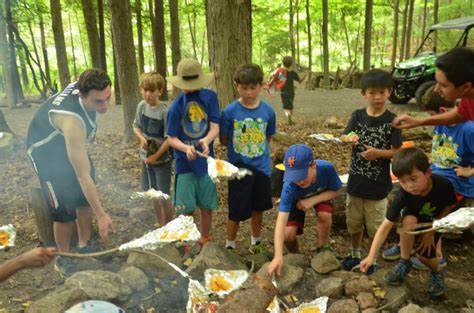
To begin I would like to point out that the mental representations, there are five and are used to help educators understand the mind and each one addresses questions. Logic addresses the if/then idea based on deductive and inductive reasoning. When I use logic when working with my beloved scout family the conversations usually work along the lines of if we wrap food in foil and place it on an open fire what do you think will happen. A simple example but pure logic sometimes escapes them, and many outcomes are usually suggested before they actually try the task. The second is Rules which are like logic in a way because there is still the if factor but then it becomes an action next. Since some of the scout’s already had done foil cooking “there way” before was it necessary to help them improve by realizing that there was more than one way but was it necessary for them to have this knowledge in order to succeed in this task or could they just listen to the rules. My believe as an educator is to find out why they had a certain knowledge of the task and to see if it needed to be improved on, not necessarily changed. OK that was a bit confusing but moving on to the next area of Concept which explains the ideas and mental image the scouts had in their head of what they needed to do. So, to go back to Rules concepts can be interpreted to rules. The knowledge known can be sorted differently and the concepts the same form into a procedure they understood. Both adults and youth can make their own decisions on whether what they have learned is useful this is all part of the cognitive process (Cherry, 2020). The simple foil pack example shows problem solving and open discussion on what is best to use and convince the group that their way was right.
The next area to cover under the mental representations is Analogies/cases and images each one seems to be a bit self-explanatory from the previous examples each one of the scouts had a visual image of what they expected and not just the eye type but also what they thought it was going to smell and taste like and they realized that not all thinking could be effective when applying it to the problem, or making a type of analogy to what they had seen before. This seems like so much information, but I did not understand that what the group was doing by way of the leaders teaching and they are learning was to go through the process of cognitive learning. This was my first AHA moment of the class.
The second section I need to review is Perkins and his way of playing the whole game. I found this entire theory fascinating. I have already put much of this in my previous Blog so I will address this point in a short fashion.
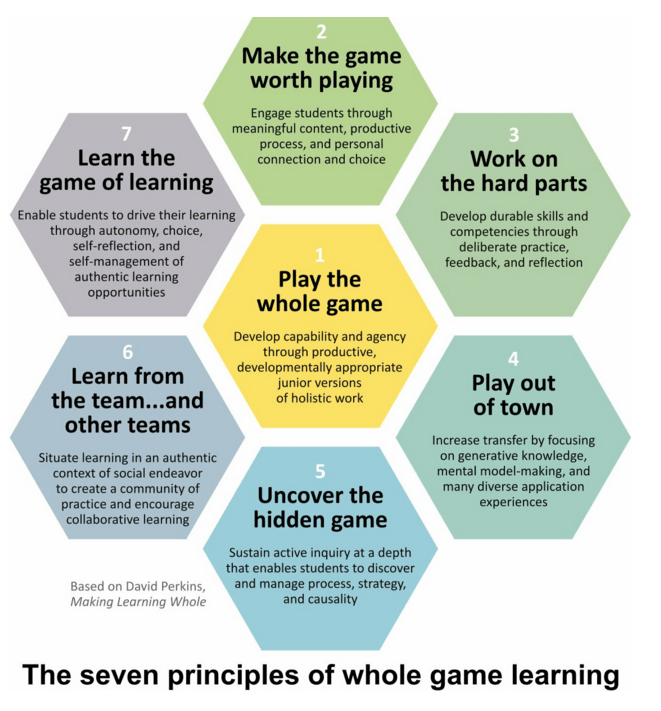
When I think about Learning the whole game (Perkins, 2009) it seems to cover so much of everyday life from my present job to teaching youth. Perkins theory covers a new piece of knowledge from beginning to end by way of moving through the natural progression or steps of learning. I believe his ideas make learning flow with the start of playing the whole game, which is a project-based event that goes through steps of learning to reach the ultimate goal of performing the task and committing it to memory. By creating a learning environment that makes learners want to keep playing along in the game and working through any parts that seem difficult and then being able to use those skills in another venue shows that Perkins theory works. Realizing that most people will have difficulty in a task is a way to uncover the hidden game or work on what went wrong when a task was used outside of learning. Sometimes it is a good idea to let scouts fail so they can ask for help from others and learn from others within their group or learn from the team. Once a group learns how to work out from beginning to end the task assigned, they have learned the whole game. It seems interesting to me how the Mental representations and Perkins seem to align with each other.
The last section I would like to review is Bronfenbrenner’s Ecological system. At first I was skeptical of his theory because we are trained as scout leaders to never look at anyone from where they came from or what they can afford but when it comes to learning I never could understand why some scouts managed to relate tasks to something they did with their family and others shied away from the conversation. It was not until I reviewed Bronfenbrenner that I understood a bit more about why.
Video
Without going into too much personal detail, some scouts do not have a parent available and grow up in not so nice areas so what they see culturally may not be the same as others within the group. Even though each individual is trained the same there may not be as much hands-on experience due to situation.
References:
Calkins, A. (2016, Jan 26). My Ways #2: Learning design as rich as you r definition of student success; The seven principles of whole game learning (image). Retrieved from https://www.nextgenlearning.org/articles/myways-2-learning-design-as-rich-as-your-definition-of-student-success
Cherry, K. (2020, Jun 3). What is cognition?. Retrieved from http://www.verywellmind.com/what-is-cognition-2794982
Gaddis, C. J. (2016, Jul 15). Cub Scouts prepare nachos at Camp Seton [image]. Retrieved from https://greenwichfreepress.com/around-town/adventures-in-cooking-headline-camp-seton-summer-camp-fun-69196/
Norris, M. (2017, Sep 15). Bronfenbrenner’s Socio-Ecological Framework . Retrieved from https://youtu.be/YYpxGH4RxmM
Perkins, D. N. (2009). Making Learning Whole: How Seven Principles of Teaching can Transform Education,1st ed. San Francisco, CA: Jossey-Bass
Published by Lynette Markey on August 14, 2020
 Lynette's Educational Journey